Granite Path Marketing · Insights
Deck and Fence Lead Generation in Ontario: A Builder’s Guide
Published October 14, 2026 · Practical marketing guidance for trade businesses
Decks and fences have one of the tightest selling windows of any Ontario trade. Homeowners want them ready for the first long weekend of summer, which means the real buying happens months earlier, when there is still snow in the yard. Builders who are visible in February and March fill their season. Builders who wait for warm weather fight over what is left.
Decks and fences are also neighbourhood businesses. A new deck is seen by every neighbour who looks over the fence, and a new fence literally sits on the line between two properties. Yard signs, neighbour referrals and a clean job site do more work here than in most trades.
How Ontario homeowners find deck and fence builders
Deck searches are split by material and design: “pressure-treated deck”, “composite deck”, “deck with glass railing”, “multi-level deck”, “deck resurfacing”. Fence searches are split by purpose: “privacy fence”, “pool fence”, “wood fence installation”, “fence repair after storm”.
Many homeowners begin with design ideas, then search for a builder once they have a rough picture. Show real projects with dimensions, materials and roughly how long they took. A homeowner who can see a deck their size in a yard like theirs is halfway to booking a visit.
The searches that usually turn into decks and fencing work fall into a few groups:
- New pressure-treated or composite decks
- Deck resurfacing (new boards on sound framing)
- Railing upgrades, including glass and aluminum
- Privacy fences and shared fences with neighbours
- Pool enclosure fences
- Storm repairs, leaning posts and gate fixes
Seasonality: planning decks and fencing marketing around the Ontario calendar
Planning starts in late winter, site visits and permits happen in March and April, and building runs from spring through fall. Composite and railing products can have lead times, so early bookings protect your schedule. Fence work runs longer into the fall than deck work, and fence repairs spike after wind storms and spring frost heave. In late fall, sell next year’s projects with an early-booking slot rather than a discount.
Local SEO and your Google Business Profile
For most deck and fence builders, the Google Business Profile is the single most important local marketing asset. Google says local results are based mainly on relevance, distance and prominence, and that complete, accurate information and reviews help (Google: Tips to improve your local ranking). There is no way to pay for a better organic local ranking.
Pick a deck builder or fence contractor category that matches most of your revenue. Post project photos with the town in the caption, and list services separately: deck building, deck resurfacing, fence installation, fence repair. Read Google: Guidelines for representing your business on Google before you change your business name, address or categories; keyword-stuffed names and fake addresses can get a profile suspended.
A few habits make a real difference over time:
- Keep your name, phone number and service area identical on your website, profile and directory listings.
- Post real photos of your crews and finished decks and fencing projects regularly.
- Answer the questions homeowners ask most on your website in plain language, and keep your profile description and services current.
- Build a service page for each main decks and fencing service and a page for each core town you serve, with genuinely local details rather than copied text.
If you want to buy visibility on top of your organic presence, Google Local Services Ads (Canada) shows ads with a pay-per-lead model for eligible home-service categories. Check eligibility and verification requirements for your trade before you count on it.
Decks and fencing job types and lead-quality signals
A good deck lead tells you the rough size, height off the ground, material preference and whether the old deck needs removal. Height matters because it drives permit requirements and footing design. A good fence lead tells you the length, the height, whether the neighbour is involved and whether there is a pool. Leads asking for a full deck “next week” in June are usually not realistic; offer the next open slot and move on.
A review strategy that follows the rules
Ask after the homeowner has used the deck for a weekend. People write better reviews after the first barbecue than on the day you pack up. Google encourages businesses to ask customers for reviews and offers a shareable review link (Google: Tips to get more reviews).
What you must not do is just as important. Google Maps policy prohibits offering incentives such as discounts or free services in exchange for reviews, posting reviews for your own business, and selectively asking only happy customers (Google Maps: Prohibited & restricted content). Ask every customer the same way, reply to every review, and answer negative reviews calmly with the facts and an offer to make it right. Future customers read your replies as closely as the reviews themselves.
If you follow up by email or text, remember that commercial electronic messages in Canada are covered by Canada’s Anti-Spam Legislation (CASL). A review request after a job is usually fine, but newsletters and promotions need the right consent.
Pricing, lead cost and lead quality for deck and fence builders
Decks are priced by size, height, material, railing and stairs. Fences are priced by length, height, material and terrain. Explain those drivers on your site so homeowners arrive with realistic expectations.
Track lead values by project type. Large composite decks and long privacy fences usually carry very different margins from small repairs.
Log every decks and fencing lead with its source, job type, town and outcome. After a few months your own cost per booked job by source will tell you more than any ad platform estimate.
Licensing, permits and rules to mention in your decks and fencing marketing
Many decks need a municipal building permit, depending on height, size and how they attach to the house. Cities publish their own rules; City of Toronto: When do I need a building permit? is one example, and City of Toronto: Building permit application guides shows the kind of drawings a permit can need. Deck structures and guards are covered by the O. Reg. 163/24, Building Code (e-Laws).
Every post hole needs locates first. Ontario’s Ontario Underground Infrastructure Notification System Act, 2012 (e-Laws) created the notification system now run by the Ontario Dig Authority. Fences are usually governed by municipal fence by-laws on height and placement, pool fences by pool enclosure by-laws, and disputes over shared line fences can fall under Ontario’s Line Fences Act (e-Laws). Homeowner contracts should follow the Consumer Protection Act, 2002 (e-Laws).
This is a starting point, not legal advice; confirm details with the regulator or your municipal building department.
Where Granite Path runs decks and fencing lead pages in Ontario
Granite Path Marketing runs homeowner request pages for decks and fencing across 15 Ontario communities, from Kingston and Belleville to Toronto, Oakville and Ottawa. You can see the full list on our Decks and Fencing hub, or look at local examples for Whitby, Oakville and Peterborough. Each page is built around one trade and one town, with a short form that asks the qualifying questions covered above.
For homeowners: choosing a decks and fencing pro in Ontario
Ask a deck or fence builder who applies for the permit, who requests locates before digging, what footings they use and what warranty covers the work. Make sure the quote lists materials, railing type, stairs and removal of the old structure.
Get at least two written quotes, check recent reviews and confirm any licence or registration with the regulator named above. If you would like help finding a local pro, you can request a match on our decks and fencing pages for Whitby, Oakville and Peterborough, or choose your town from the Decks and Fencing hub.
Frequently asked questions
When should a deck builder start advertising?
Late winter. That is when homeowners plan, and when you can fit in site visits and permit applications before the season starts.
Do I need locates for every fence post?
Yes. Request locates through the Ontario Dig Authority system before you dig, every time.
Should I resurface old decks or only build new ones?
Resurfacing can be profitable and fast when the framing is sound. Inspect first and be honest when it is not.
How do I handle fences between neighbours?
Ask on the form whether a neighbour is sharing the cost, and agree on the line before you dig. It prevents disputes mid-job.
Get more decks and fencing jobs with Granite Path Marketing
Granite Path Marketing helps Ontario deck and fence builders build a lead system they can measure: local landing pages, a well-run Google Business Profile, honest review habits and tracking that shows which leads turn into booked jobs. If you want more decks and fencing work in your area, talk with our team and we will walk you through what that looks like for your business.
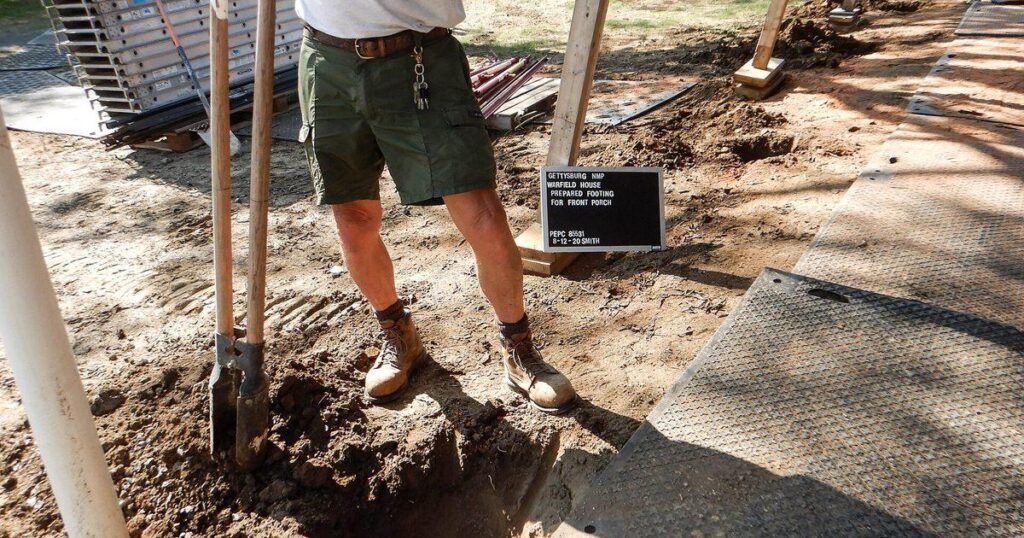
Featured image: “5. Porch Deck Construction. (2930cbf4-38d1-4020-ab7f-c139e9e06f81)” by U.S. National Park Service, via Wikimedia Commons (https://commons.wikimedia.org/wiki/File:5._Porch_Deck_Construction._(2930cbf4-38d1-4020-ab7f-c139e9e06f81).jpg), licensed Public domain. Cropped and resized.
Talk with Granite Path Marketing about a measurable lead-generation system.