Granite Path Marketing · Insights
Roofing Lead Generation in Ontario: A Guide for Roofing Contractors
Published October 14, 2026 · Practical marketing guidance for trade businesses
Roofing is a big-ticket, infrequent purchase. Most homeowners replace a roof only a few times in their lives, so they do not know who to call, what a fair price is or how to tell a good roofer from a fly-by-night crew. That uncertainty is your opportunity. Roofers who explain the process clearly and show proof of their work win more of the jobs worth having.
This guide covers how Ontario homeowners look for roofers, how the short roofing season affects lead flow, how to set up your Google Business Profile, how to collect reviews properly, and how to price and qualify leads. It also covers the safety and permit rules that belong in your marketing.
How Ontario homeowners find roofers
Roofing searches fall into repair and replacement. Repair searches spike after storms: “roof leak repair”, “missing shingles”, “emergency roof tarp”. Replacement searches are more planned: “roof replacement cost”, “asphalt shingle roofers”, “metal roof installation”.
Many homeowners start with a photo and a question. They see shingles in the yard or a stain on the ceiling and want to know if it is serious. Content that answers those questions, and a form that lets them upload photos, gets you into the conversation early.
The searches that usually turn into roofing work fall into a few groups:
- Roof leak repair (urgent, after storms)
- Roof replacement quotes (planned)
- Metal roofing (planned, higher budget)
- Flat roof repair (urban and commercial)
- Eavestrough and flashing repairs (often bundled)
Seasonality: planning roofing marketing around the Ontario calendar
In Ontario, most roof replacements happen between spring and late fall, because cold weather makes shingle installation harder. Lead flow often surges after wind and hail storms. Winter is a good time to sell next season’s work: homeowners who noticed problems in the fall can book an inspection and a spring start date. Keep ads running at a lower level through winter so your calendar fills before the season opens.
Local SEO and your Google Business Profile
For most roofers, the Google Business Profile is the single most important local marketing asset. Google says local results are based mainly on relevance, distance and prominence, and that complete, accurate information and reviews help (Google: Tips to improve your local ranking). There is no way to pay for a better organic local ranking.
Use a roofing contractor category as your primary category. Upload real photos of your crews and finished roofs, not stock images. List each service separately (shingle roofing, flat roofing, metal roofing, repairs) and keep your service area to the towns you will actually drive to. Google’s guidelines say service-area businesses should not show an address customers cannot visit. Read Google: Guidelines for representing your business on Google before you change your business name, address or categories; keyword-stuffed names and fake addresses can get a profile suspended.
A few habits make a real difference over time:
- Keep your name, phone number and service area identical on your website, profile and directory listings.
- Post real photos of your crews and finished roofing projects regularly.
- Answer the questions homeowners ask most on your website in plain language, and keep your profile description and services current.
- Build a service page for each main roofing service and a page for each core town you serve, with genuinely local details rather than copied text.
If you want to buy visibility on top of your organic presence, Google Local Services Ads (Canada) shows ads with a pay-per-lead model for eligible home-service categories. Check eligibility and verification requirements for your trade before you count on it.
Roofing job types and lead-quality signals
Strong roofing leads tell you the roof type, approximate age, the problem and whether the homeowner owns the property. Photos from the ground help. Insurance-claim leads need extra paperwork.
A review strategy that follows the rules
The best moment to ask is at the final walk-around, when the yard is clean and the homeowner can see the finished roof. Before-and-after photos in your reply to a review also help future buyers. Google encourages businesses to ask customers for reviews and offers a shareable review link (Google: Tips to get more reviews).
What you must not do is just as important. Google Maps policy prohibits offering incentives such as discounts or free services in exchange for reviews, posting reviews for your own business, and selectively asking only happy customers (Google Maps: Prohibited & restricted content). Ask every customer the same way, reply to every review, and answer negative reviews calmly with the facts and an offer to make it right. Future customers read your replies as closely as the reviews themselves.
If you follow up by email or text, remember that commercial electronic messages in Canada are covered by Canada’s Anti-Spam Legislation (CASL). A review request after a job is usually fine, but newsletters and promotions need the right consent.
Pricing, lead cost and lead quality for roofers
Roofing leads are expensive because roofing jobs are valuable. Know your average job value and close rate before you set a cost-per-lead target. A lead that turns into a full replacement can justify a much higher cost than a small repair.
Storm-chasing competitors sometimes flood a market after big weather. Stand out by being local and by showing your address, insurance and warranty terms. Qualify leads by asking about roof age, roof type, ownership and timeline.
Log every roofing lead with its source, job type, town and outcome. After a few months your own cost per booked job by source will tell you more than any ad platform estimate.
Licensing, permits and rules to mention in your roofing marketing
Skilled Trades Ontario lists Roofer (449A) as a non-compulsory trade, so certification is not legally required to do the work, but certified roofers and apprentices are a strong trust signal. See Skilled Trades Ontario: Roofer (449A). Roofing is also high-risk work: Ontario’s O. Reg. 213/91, Construction Projects (e-Laws) covers fall protection, and workers who use fall protection on construction projects need approved training, explained in Ontario: Training for working at heights.
Roofing materials and assemblies are governed by the O. Reg. 163/24, Building Code (e-Laws), and some roof work needs a municipal building permit; see Ontario’s guide to building permits. Make sure your contracts follow the Consumer Protection Act, 2002 (e-Laws), and point homeowners to Consumer Protection Ontario if they want to understand their rights. You will rarely lose a good customer by being transparent.
This is a starting point, not legal advice; confirm details with the regulator or your municipal building department.
Where Granite Path runs roofing lead pages in Ontario
Granite Path Marketing runs homeowner request pages for roofing across 15 Ontario communities, from Kingston and Belleville to Toronto, Oakville and Ottawa. You can see the full list on our Roofing hub, or look at local examples for Peterborough, Whitby and Belleville. Each page is built around one trade and one town, with a short form that asks the qualifying questions covered above.
For homeowners: choosing a roofing pro in Ontario
Ask a roofer about insurance and WSIB coverage, fall-protection training, what the warranty covers, whether old layers will be removed and who checks permit requirements.
Get at least two written quotes, check recent reviews and confirm any licence or registration with the regulator named above. If you would like help finding a local pro, you can request a match on our roofing pages for Peterborough, Whitby and Belleville, or choose your town from the Roofing hub.
Frequently asked questions
How far ahead should I book roof replacements?
Many roofers fill spring and summer calendars during the winter. Running a modest campaign over the winter months helps you start the season with booked work.
Should I advertise free inspections?
If you can afford the time, inspections are a good way to start a conversation. Make sure the offer is clear and does not come with pressure tactics.
What makes a roofing lead high quality?
A homeowner who owns the property, knows the roof’s approximate age, has a realistic timeline and lives in your service area.
Get more roofing jobs with Granite Path Marketing
Granite Path Marketing helps Ontario roofers build a lead system they can measure: local landing pages, a well-run Google Business Profile, honest review habits and tracking that shows which leads turn into booked jobs. If you want more roofing work in your area, talk with our team and we will walk you through what that looks like for your business.
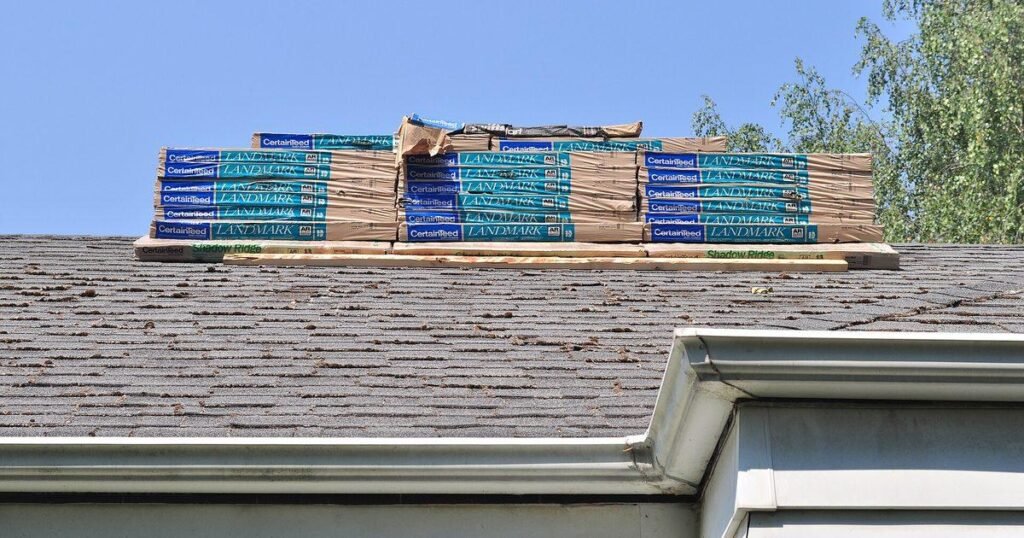
Featured image: “Shingles atop roof” by Joe Mabel, via Wikimedia Commons (https://commons.wikimedia.org/wiki/File:Shingles_atop_roof.jpg), licensed CC BY 4.0 (https://creativecommons.org/licenses/by/4.0). Cropped and resized.
Talk with Granite Path Marketing about a measurable lead-generation system.